
The short answer: DeepSeek’s R1 validates Kai-Fu Lee’s 2018 prediction that China would become an AI superpower, driven by vast data, aggressive policy, and rapid iteration. Its breakthrough is efficiency: high performance at a fraction of the cost of leading US models, which pressures the assumption that frontier AI requires massive proprietary budgets and reshapes the competitive landscape.
In 2018, Dr. Kai-Fu Lee predicted a seismic shift in global AI dominance. Today, DeepSeek’s breakthrough validates his vision.
Introduction: A Prophetic Blueprint Meets Reality
Dr. Kai-Fu Lee’s “AI Superpowers: China, Silicon Valley, and the New World Order” foresaw China’s ascent in AI innovation, powered by three key advantages:
- Vast data reserves
- Aggressive government policies
- Culture of rapid iteration
Now in 2025, Chinese AI startup DeepSeek proves Lee’s foresight with its high-performance, cost-efficient LLM R1. This kind of cost collapse is exactly what makes vertical AI agents a genuine business opportunity, since advanced models become affordable enough to serve narrow markets.
1. Kai-Fu Lee’s Core Predictions: A Recap
A. Data as the “New Oil”
Lee identified China’s unparalleled data access as its “true gold.” Unlike the fragmented U.S. market:
- Massive Scale
- 1.4 billion population
- Integrated digital ecosystems
- Centralized Platforms
- WeChat ecosystem
- Alibaba’s data network
DeepSeek’s Validation:
- R1 model leverages vast Chinese-language datasets
- Achieves OpenAI-level results at 1/25th the inference cost
B. The “Fast Follower” Strategy
China excels at scaling Western innovations efficiently:
- Cost Leadership
- DeepSeek-V3: 671B parameters
- Training cost: $5.58 million vs OpenAI’s $100M+
- Engineering Excellence
- Optimized training procedures
- Resource-efficient architectures
C. Government-Industry Symbiosis
China’s coordinated AI development creates unique advantages:
- Policy Support
- 2017 Next Generation AI Development Plan
- Integrated industrial clusters
- Resource Optimization
- Training V3 on 2,048 Nvidia H800 chips
- Hardware efficiency breakthroughs
D. Engineering Over Pure Innovation
While Silicon Valley leads in research, China focuses on practical scaling:
- 01.AI achieves 3% of OpenAI’s costs
- R1 prioritizes real-world application efficiency
The Four Waves of AI: DeepSeek’s Position
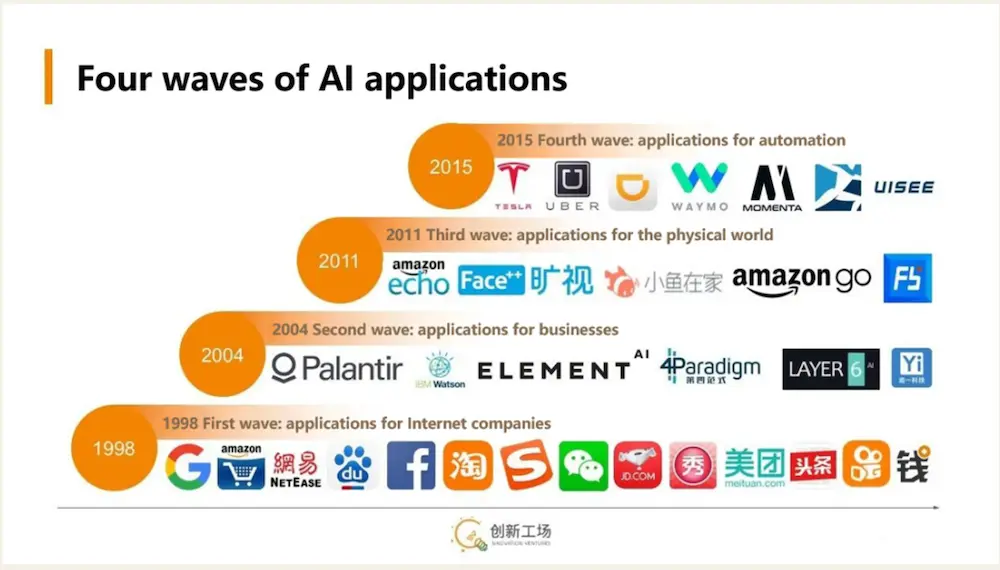
Key Insight: DeepSeek R1 bridges Internet and Business AI:
- $0.02 per million tokens (vs OpenAI’s $0.50)
- Enterprise-ready capabilities
- Mass-market accessibility
3. Global Implications
Competitive Dynamics
The emergence of cost-efficient Chinese models creates:
- Market Pressure
- U.S. firms face margin compression
- Meta and OpenAI adapt pricing
- Innovation Catalyst
- Open-source collaboration
- Cross-border development
For builders, cheaper frontier models lower the bar to shipping real products, which is why I wrote a practical guide to building AI solutions beyond the hype.
Ethical Considerations
- Benefits
- Human-centric AI development
- Broader access to AI capabilities
- Challenges
- Surveillance concerns
- Transparency trade-offs
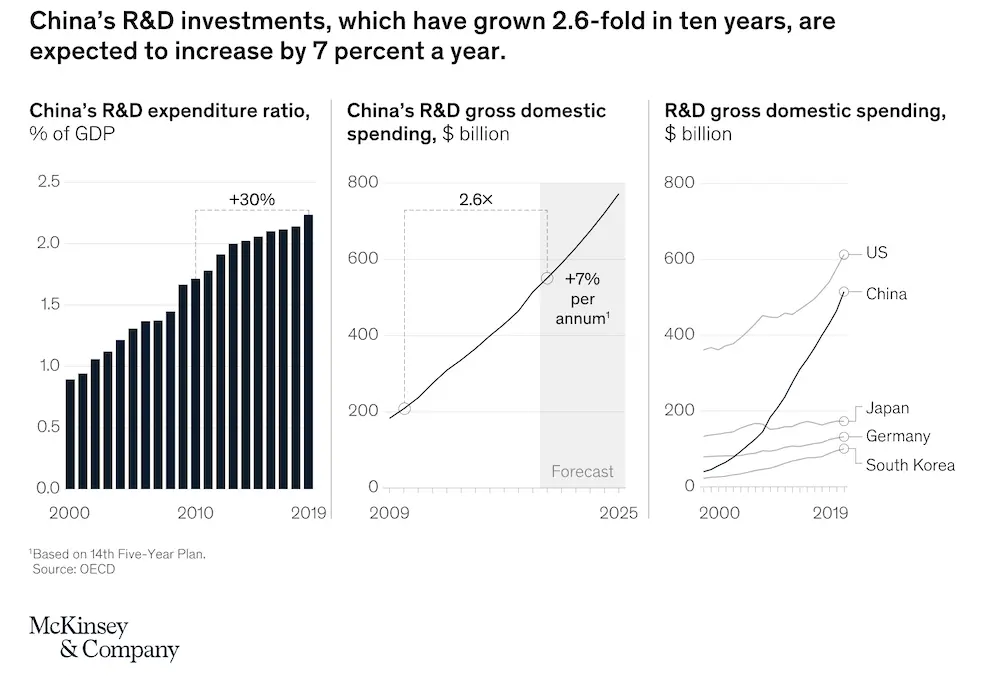
4. Market Analysis and Trends
5. The Road Ahead: Compassionate AI
Lee’s vision emphasizes balancing progress with humanity:
Recommendations
- Social Investment Stipends
- Alternative to UBI
- Community service incentives
- Education and caregiving focus
- Global Governance
- Coordinated ethics standards
- Safety-first development
- Cross-border cooperation
Conclusion: A New World Order
DeepSeek exemplifies China’s emerging AI leadership through:
- Data advantages
- Efficiency focus
- Policy support
- Engineering excellence
Yet, as Lee reminds us: “The true measure of success lies not in technical supremacy but in building a society where love always wins.”
---
References
- Paz, B.J. (2020). Kai-Fu-Lee (2019): AI Superpowers China, Silicon Valley and the New World Order. Springer.
- Turkanis, C.E., & Liang, W. (2020). Kai-Fu Lee, AI Superpowers: China, Silicon Valley, and the New World Order. Springer.
What are your thoughts on the future of AI development? Share your perspective in the comments below.